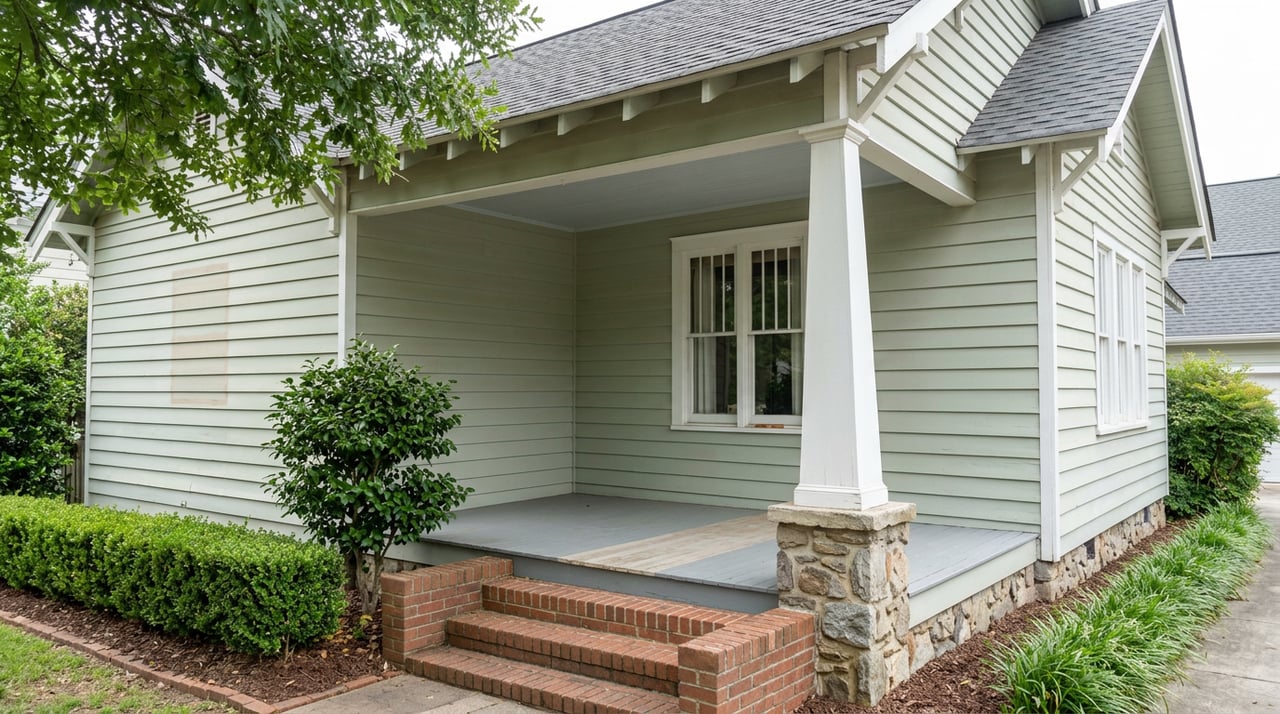
Say you just closed on a 1920s bungalow in Pettigru. The moving truck is still in the driveway, the contractor is scheduled for Monday, and the plan is simple: pull off the old aluminum siding, get down to the original wood, and start making the place yours. That plan is reasonable. In this particular pocket of Greenville, it is important to confirm the approval sequence before work begins.
Here are the two clocks to keep in mind. A house in one of the seven historic districts listed by GVLtoday can involve sign-off by the City of Greenville for covered exterior work. Skipping city approval can have consequences; the state credit has its own application process.
Two Clocks, Not One
The first clock belongs to the City of Greenville. Any exterior change, addition, or demolition in a preservation overlay district, from new siding to a replaced window to tearing down a garage, requires a Certificate of Appropriateness from the city's Historic Review Board before work starts. The board evaluates projects against the Secretary of the Interior's Standards for Rehabilitation and the city's own design guidelines for preservation overlay districts.
The City of Greenville's Design Review Board handles a different jurisdiction entirely: the Downtown Design Overlay District, under guidelines adopted in 2017. That board approves things like hotel renovations and new mixed-use buildings on Main Street. If your house is in Pettigru or Overbrook, this isn't your board. Confusing the two costs people real time when they call the wrong office.
The second clock belongs to the state. South Carolina's historic rehabilitation tax credit statute provides a 25% credit for owner-occupied homes.
| City Certificate of Appropriateness | State 25% Rehab Tax Credit | |
|---|---|---|
| Who reviews it | Historic Review Board | State Historic Preservation Officer, SC Department of Archives and History |
| What triggers review | Exterior change, addition, or demolition | Qualifying rehabilitation expenses |
| Review process | Before work begins | The credit has a separate application process |
| What you lose by skipping it | Skipping city review can have consequences | The credit may be affected |
The city and state processes are separate; if you plan to claim the credit, review its application process separately.
The Seven Neighborhoods This Actually Touches
Not every old house in Greenville falls under this. The city's seven historic districts are Hampton-Pinckney, Pettigru, Overbrook, West End, Heritage, East Park Avenue, and Colonel Elias Earle. A charming older home a block outside the mapped boundary of any of these makes confirming district status before writing an offer especially worthwhile.
Hampton-Pinckney is the oldest of the group, sitting between Asbury Avenue and Buncombe Street on land Vardry McBee purchased in 1815. It became Greenville's first local preservation overlay district. Pettigru is the largest, with roughly 88 structures built mostly between 1910 and 1930, a mix of Queen Anne, bungalow, and Colonial Revival styles that got the district onto the National Register in the early 1980s.
That National Register distinction matters for reasons beyond curb appeal. Local historic district status and National Register status aren't the same thing. The South Carolina Preservation Toolkit explains that local historic-district status alone does not qualify a property for the state tax credit; the property must be individually listed on the National Register, contribute to a listed National Register district, or be determined eligible by the SHPO. A house can sit inside one of Greenville's seven local districts, subject to the full Certificate of Appropriateness process, without automatically qualifying for the 25% rehab credit. Buyers considering a home in any of the seven districts should confirm the specific address's National Register status before counting on the credit in their renovation math.
Understanding the Tax Credit Before You Budget
Assuming the house qualifies, the mechanics of the credit are worth understanding before you budget around it. The South Carolina Department of Revenue says rehabilitation expenses have to exceed $15,000 within a 36-month window. The credit itself equals 25% of qualifying expenses, but it isn't a lump sum. It's claimed in equal installments spread over a three-year period, with any unused portion carried forward for up to five years. You can't claim more than one credit on the same property within a ten-year span.
None of that helps if the sequencing is wrong. The South Carolina Department of Revenue describes three stages with the SHPO: an evaluation of significance, a description of the proposed rehabilitation, and, after the work wraps, documentation of what was actually done. The middle stage is the one that trips people up; it is worth reviewing carefully while you plan the project. The SHPO also keeps the right to inspect the property for up to five years while you're claiming the credit, so the paper trail has to hold up well after the dumpster leaves the driveway.
What the Inspector Usually Finds Underneath All This
The regulatory sequencing sits on top of a physical reality that's just as relevant to a buyer's budget. Candid Home Inspections, which works throughout the Greenville area, notes that bungalows in Augusta Road, North Main, and downtown Greenville commonly hide knob-and-tube wiring, cast-iron drain pipes, asbestos siding, and lead paint behind their original charm. That's the housing stock the seven historic districts are largely built from, and it's worth pricing in before the walkthrough turns into a demolition.
A few specifics that show up often enough to plan around:
- Galvanized steel plumbing, common in homes built before 1980, corrodes from the inside and eventually needs a full repipe. Local plumbing companies quote whole-house repiping in the $3,000 to $10,000-plus range depending on scope.
- Homes with a water heater past the 8 to 12 year mark are due for replacement, typically running $800 to $2,500.
- Old clay or cast-iron sewer laterals are a common target for tree root intrusion, which is why a sewer scope is worth adding to due diligence on anything over 20 years old.
- Lead paint is a real consideration. Productive Builders explains that the federal rule applies if the property is later rented, used for child care, or renovated for resale, which is worth knowing if the long-term plan for the house isn't fixed yet.
What This Means If You're Buying Here
If a fixer-upper in one of these seven districts is on your list, the smartest move before writing an offer is confirming two things separately: whether the address sits inside the mapped preservation overlay boundary, and whether it's individually listed or contributes to a National Register district. Those two facts determine which clocks apply and whether the tax credit is even in play.
After that, the planning shifts from money to timing. Line up the Historic Review Board application before your contractor sets a start date, and review the SHPO's evaluation process if the credit matters to your budget. A renovation plan that assumes work starts the weekend of closing is a plan built for a different kind of house. In a preservation overlay district, the city's approval process is part of renovation planning.
A Few Quick Answers
Does every historic-looking house in Greenville fall under these rules? No. The city's seven mapped preservation overlay districts are Hampton-Pinckney, Pettigru, Overbrook, West End, Heritage, East Park Avenue, and Colonel Elias Earle. Confirm an address's district status before relying on these rules.
Does local historic district status automatically qualify a house for the state's 25% rehab credit? No. The credit requires the property to be individually listed on the National Register, contribute to a National Register historic district, or be determined eligible by the State Historic Preservation Officer. Local preservation overlay status alone doesn't guarantee it.
How much does a renovation have to cost before the credit applies? Qualifying rehabilitation expenses must exceed $15,000 within a 36-month period, per South Carolina's historic rehabilitation statute.
What actually happens if I start work before SHPO approval? The expenses tied to that unapproved work are disqualified from the credit calculation. There's no partial credit or appeal for that portion, which is why the sequencing matters more than the total budget.
If you're weighing a fixer-upper in one of Greenville's historic districts and want help sorting out which clocks apply to a specific address before you write an offer, Brockelman Realty can walk through the district boundaries, the renovation math, and the presentation plan together. Book a Consultation and let's map out the right order before the first wall comes down.
This article is general information, not legal, tax or financial advice. Consult a qualified professional about your situation.