A seller in Greer fills out South Carolina's disclosure form the way most people do: honestly, based on what they actually know. They've never had water in the crawl space. They've never smelled anything musty. They check "No" next to structural problems and move on to closing on a Tuesday afternoon.
Then the buyer's inspector goes under the house.
This gap, between what a seller legally has to say and what a crawl space in Greer is physically likely to reveal, is the single most consistent source of friction in local transactions right now. It isn't dishonesty. It's a mismatch between a law built around personal knowledge and a housing stock built on clay soil in a humid climate. Understanding that mismatch, and where it shows up differently depending on which part of Greer a house sits in, is the difference between a smooth closing and a renegotiated one.
The Disclosure Form Only Knows What the Seller Knows
South Carolina's Residential Property Condition Disclosure Act requires sellers to report problems they have actual knowledge of. That standard, defined under South Carolina Code § 27-50-40, means exactly what it says: what the seller genuinely knows at the time they fill out the form. It does not extend to what a home inspector would find, what a contractor might suspect, or what a careful crawl space inspection would turn up. If a seller never looked under the house, they aren't required to guess what's down there.
Selling "as is" doesn't change this. A South Carolina seller who uses an as-is addendum still has to disclose known material defects, as DeBruin Law Firm explains. The addendum affects who pays for repairs, not whether the seller has to tell the truth about what they know.
There's a second layer that trips people up mid-contract. If a seller learns something new after signing the disclosure statement, maybe the buyer's inspector finds a torn vapor barrier the seller never knew existed, Nolo says the seller has to promptly correct the disclosure or make reasonable repairs before closing. That's not optional. It also cuts the other way: sellers who disclose everything they know are protected from being sued over it later.
None of this requires bad faith on anyone's part. It just means the paperwork and the physical house are answering two different questions.
Why Greer's Geography Fills the Gap the Law Leaves Open
Here's where the mismatch becomes predictable instead of random. Greer's housing stock breaks into distinct pockets, and the age and construction of a home's crawl space tracks closely with which pocket it's in. Local crawl space contractors describe the pattern as older ranches in the downtown grid, farmhouses scattered across the east side, and newer construction clustered around the BMW plant. Different houses, different moisture problems, same underlying soil and climate working against all of them.
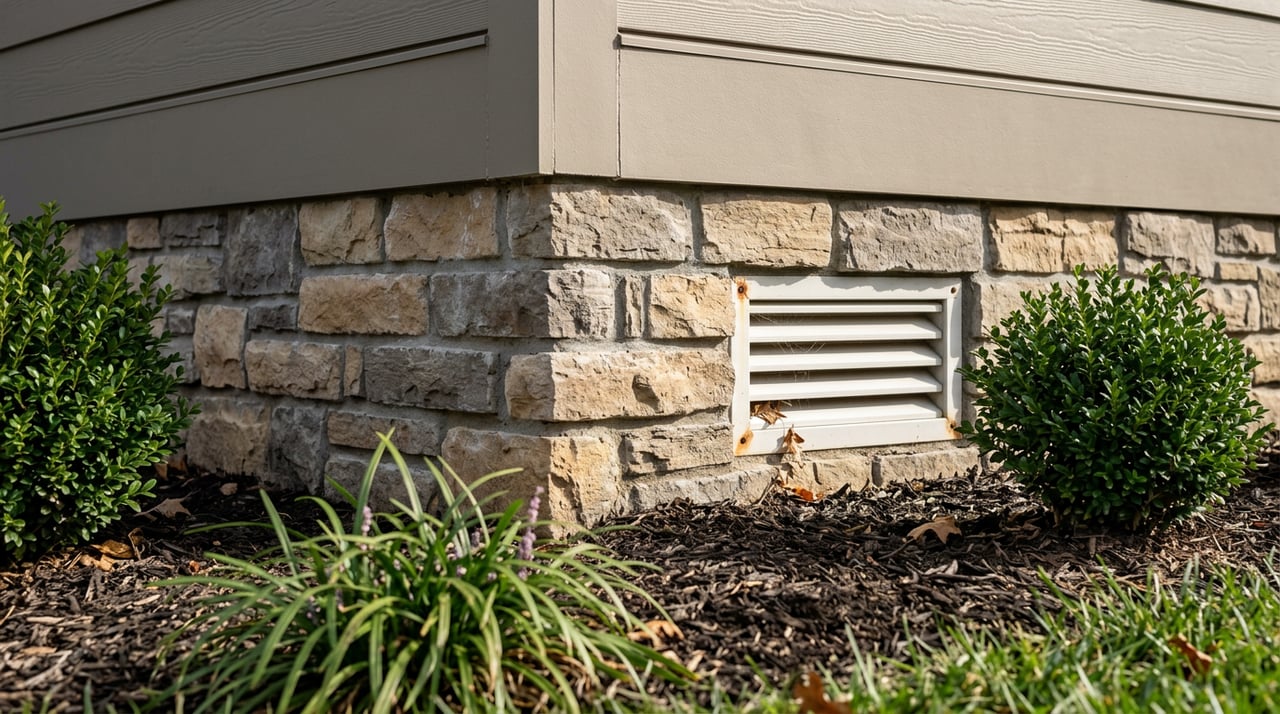
In the downtown grid specifically, a lot of homes still have their original vented crawlspace design with no vapor barrier at all, or one that's decades old and has deteriorated past the point of doing anything useful. Nobody lied on a disclosure form. The seller just never had a reason to go looking, because a vented crawlspace with no barrier doesn't smell wrong until the humidity has had years to work on it.
The soil itself does the rest of the work. Greer sits on clay-rich ground that expands when saturated and contracts when dry, which means the same foundation experiences seasonal pressure whether or not anyone is paying attention to it. A house can look and smell fine in October and still fail a crawl space inspection in July, because the ground underneath it has been swelling and shrinking the whole time.
Here's roughly what that looks like by pocket, based on the housing patterns and repair costs local crawl space companies report for Greer:
| Greer housing pocket | Typical crawl space setup | What inspectors commonly flag | Local repair range |
|---|---|---|---|
| Downtown grid, older homes | Original vented design, vapor barrier absent or 30+ years old | Torn or missing barrier, musty odor, soft or uneven flooring | $1,400 to $5,450 for repair, often trending toward full encapsulation |
| East-side homes with additions | Mix of original construction and later add-ons | Inconsistent moisture control between the original structure and newer sections, varies by renovation history | Varies widely depending on what was sealed and when |
| BMW corridor new construction | Newer sealed or partially sealed systems | Barrier present but seams, drainage, or dehumidification struggling against clay-soil pressure | $2,900 to $7,400 for full encapsulation if problems surface |
None of these numbers are a guarantee of what any specific house will need. They're a rough map of where the money tends to go once an inspector actually gets under the floor.
The Second Blind Spot: Radon Nobody Has to Test For
There's a version of this same mismatch happening above ground, and it involves a risk most people assume would be regulated if it were serious. It isn't.
Greenville County is the only county in South Carolina rated EPA Zone 1 for radon potential, the agency's highest risk category, with average test results around 3.4 picocuries per liter across thousands of samples. Spartanburg, Pickens, and Cherokee counties sit one tier down at Zone 2. The EPA's radon zone map exists precisely because this kind of variation is real and geographic, tied to the granite and Piedmont geology under the Upstate.
South Carolina has no law requiring radon testing or disclosure in a real estate transaction, according to Radon.org. A seller can have lived in a home for twenty years, never tested, and have nothing to disclose because there's nothing to know. A buyer who assumes silence on the disclosure form means the house is clean is making an assumption the law was never designed to support.
If a test does come back elevated, the fix is usually less dramatic than the diagnosis. Mitigation systems in South Carolina typically run around $800 to $2,500 installed, with many homeowners landing closer to $1,200 to $1,500. That's a manageable number when it's planned for. It's a much worse conversation when it surfaces three days before closing.
What This Means If You're Selling or Buying in Greer Right Now
As of July 2026, Greer's market has been moving fast. The median sold price over the trailing six months sat around $360,000 against a median active asking price near $394,500, and the typical active listing has been on the market only a couple of days before going under contract. That speed is exactly why inspection surprises hit harder here than in a slower market. There's little room to absorb a renegotiation when the next buyer is already lined up behind the current one.
A few things worth doing before a Greer home ever hits the market:
- Get under the house before a buyer's inspector does. A pre-listing crawl space check costs far less than a mid-contract scramble, and it turns an unknown into a known repair with a known price.
- Test for radon voluntarily, even though nothing requires it. In a Zone 1 county, a clean test is a selling point. An elevated one caught early is a manageable line item instead of a closing-week crisis.
- Understand that "as is" doesn't mean "no questions asked." Sellers still owe buyers an honest account of what they actually know, and buyers should treat that account as a starting point, not a finish line.
- Budget renovation and staging decisions around what the house's specific pocket typically needs. A downtown grid ranch and a BMW-corridor new build are not facing the same odds under the floor.
This is the exact intersection where design-forward preparation earns its keep. A staging plan means very little if the crawl space underneath it fails inspection two weeks later. Getting ahead of the physical condition of a home, not just its presentation, is what turns a listing into a closing.
A Few Quick Answers
Does South Carolina require a home inspection before closing? No. Inspections are typically negotiated between buyer and seller as part of the contract. Most buyers choose to order one anyway.
Can a seller skip the disclosure form by selling as-is? No. An as-is sale changes who pays for repairs. It does not remove the legal duty to disclose known material defects.
Is radon testing required anywhere in South Carolina? No, not for real estate transactions. Testing is voluntary, even in Greenville County's Zone 1 designation.
If you're weighing whether to list a Greer home this year, or you're under contract and staring down an inspection report that doesn't match the disclosure statement, the team at Brockelman Realty can walk through what's actually worth fixing before you list and what can wait. Book a Consultation and let's look at your specific pocket of Greer together.
This article is general information, not legal, tax or financial advice. Consult a qualified professional about your situation.