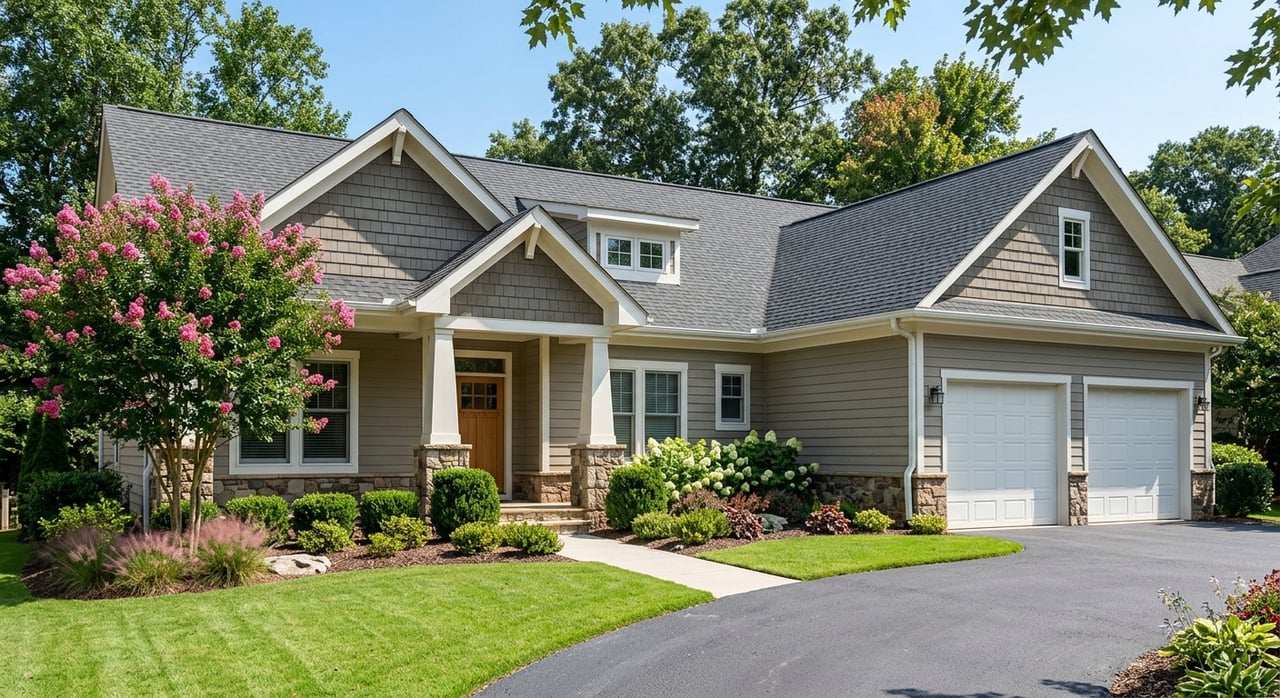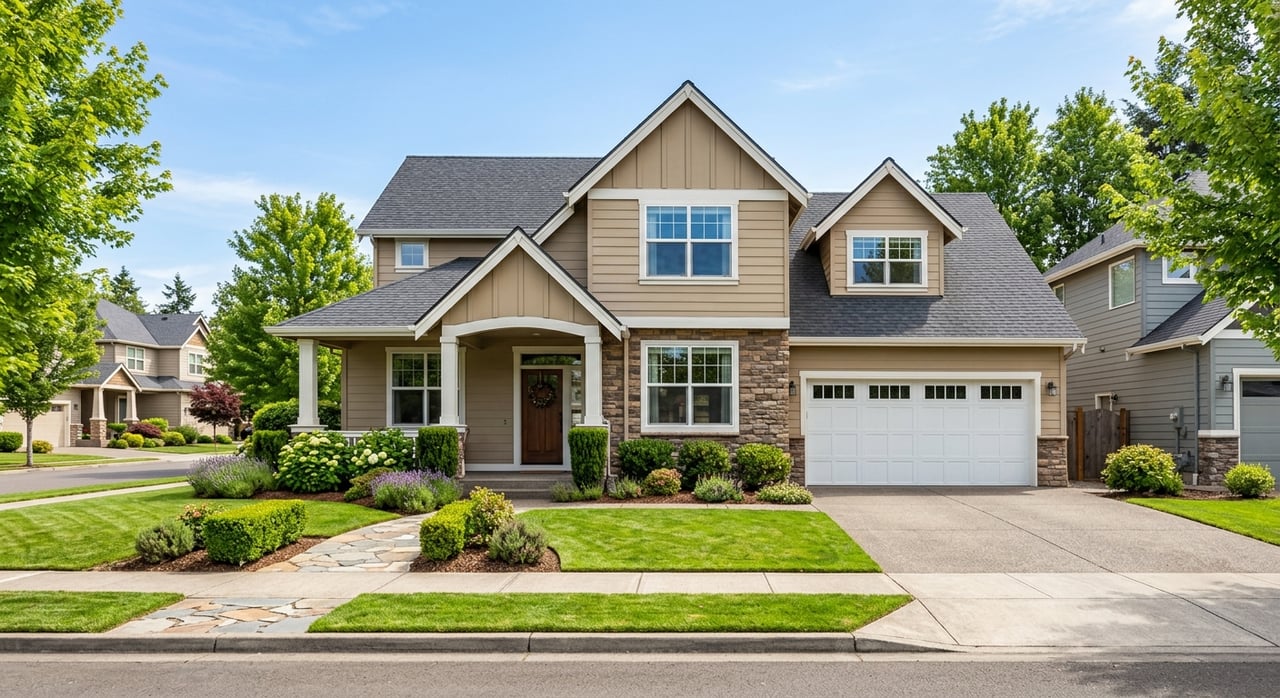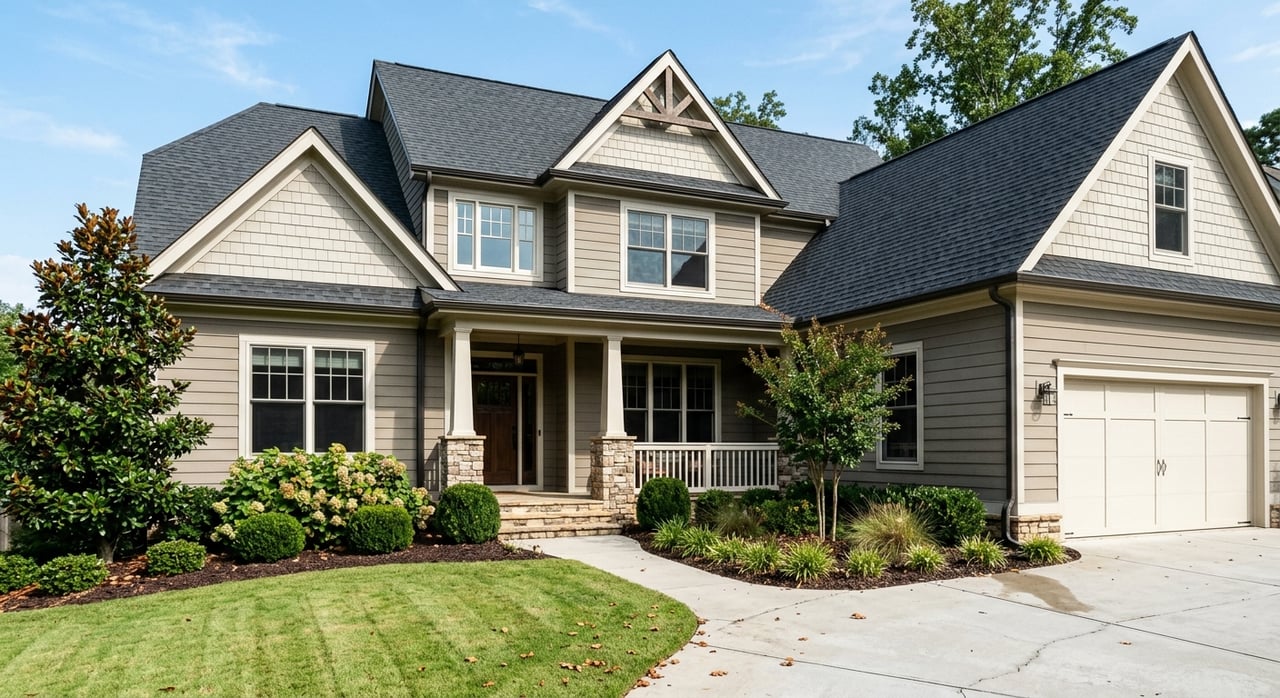
If you are trying to sell your current home and buy your next one in Spartanburg, you are not stepping into one market. You are stepping into two. That matters because today’s numbers show a very real split between what happens at the lower price points and what you may face as you move up. In this guide, you’ll see where competition is still strong, where you may have more negotiating room, and how to plan your timing with more confidence. Let’s dive in.
Spartanburg’s market is active, but calmer
The latest local update for March 2026 points to a market that is still competitive, just less intense than it was a year ago. New listings rose to 264 from 168 a year earlier, closed sales increased to 122 from 115, and homes for sale reached 549. At the same time, days on market moved to 69, which gives buyers a little more breathing room than in a faster-paced market.
Pricing is still holding up well. The median sales price was $268,500, and sellers received 98.7% of list price on average. Across the broader Spartanburg Association MLS, inventory sat at 3.5 months, which suggests the market has loosened but has not shifted into a deeply buyer-driven environment.
For move-up buyers, that middle ground can be helpful. You may have more choices than you did before, but you still need a smart plan when the right home appears.
Move-up buyers are working in two markets
One of the biggest mistakes move-up buyers can make is assuming their sale and purchase will follow the same rules. In Spartanburg, the data suggests otherwise. The lower price bands remain tighter, while the move-up bands are more balanced.
That means your current home may attract strong attention if it falls in an entry-level range, but the home you want to buy may offer a bit more flexibility. This difference is especially important if you are trying to line up both sides of the transaction in the same season. Timing, pricing, and negotiation all need to be handled with that split in mind.
Where competition is strongest in Spartanburg
The toughest competition is still at the lower end of the market. In the June 2025 housing supply overview, homes under $150,000 had 2.6 months of supply, and the $150,001 to $250,000 range had 3.0 months of supply. Those are the tightest conditions in the local price bands reviewed.
That lower inventory means buyers in those ranges often have fewer choices. It also means sellers of starter homes can still benefit from strong demand, especially if the home shows well and is priced with care.
There is one important detail here. In the under-$150,000 band, sellers received 94.6% of list price on average, which shows that condition and pricing discipline still matter. Even in a tighter segment, buyers notice deferred maintenance and overpricing.
Where move-up buyers may find more options
For many move-up buyers, the sweet spot is in the $250,001 to $500,000 range. This is where inventory becomes more balanced. The June 2025 report showed 4.0 months of supply in the $250,001 to $350,000 band and 4.4 months in the $350,001 to $500,000 band.
That does not mean these homes are easy to win. It does mean you may see more choice and a bit less pressure than buyers at the entry level. This range also showed strong demand, with the biggest pending-sales gain in the $350,001 to $500,000 band, up 19.0%.
That matters if your next step is a larger single-family home. Demand by bedroom count was strongest for homes with four bedrooms or more, up 18.2%, which fits what many move-up buyers are searching for as life changes and space needs grow.
What pricing power looks like by price band
Move-up buyers should pay close attention to how pricing leverage changes as price rises. In the $150,001 to $500,000 bands, sellers received about 98.5% to 98.9% of list price. That tells you the middle of the market is still fairly sticky on price.
In practical terms, if you are buying in that range, you should be prepared to make a serious offer when the home checks your boxes. You may not need to be reckless, but you also should not assume a large discount is waiting for you.
Above $500,000, the picture changes more noticeably. Months of supply rose to 6.3 in the $500,001 to $750,000 band, 9.0 in the $750,001 to $1,000,000 band, and 15.3 above $1,000,001. In those upper bands, sale-to-list ratios also softened, which suggests buyers may have more room to negotiate on price, repairs, or seller concessions.
Mortgage rates still shape the move-up decision
Price is only part of the affordability picture right now. Freddie Mac’s weekly survey put the 30-year fixed mortgage rate at 6.37% on May 7, 2026. That was slightly higher than the week before, but lower than 6.76% a year earlier.
For move-up buyers, a small rate change can have a meaningful effect on your monthly payment. When you are buying a more expensive home, even a modest shift in rate can change what feels comfortable in your budget.
That is why preapproval and payment scenario planning should happen before you list your current home. Looking only at the target purchase price is not enough. You want to understand the payment at different rate assumptions so you can move quickly without guessing.
What this means if you are selling first
If your current home is in a lower price band, you may be entering the tighter side of the market as a seller. That can work in your favor, but it does not remove the need for preparation. Condition, presentation, and pricing still shape your result.
This is where a thoughtful plan matters. A well-prepared home tends to help buyers picture the space more clearly, and that can make your listing stand out when new inventory is rising. In a market with more listings than last year, presentation still has real value.
If you can create a strong sale on your current home, you give yourself more flexibility on the buy side. You also put yourself in a better position to act decisively when the right move-up home comes available.
What this means if you are buying next
If your move-up target falls between $250,000 and $500,000, expect a market that is more balanced than the entry level but still active. Homes in this range are seeing steady demand, and sellers are still receiving close to list price on average.
That means your strategy should focus on clarity, not hesitation. Know your budget, your must-haves, and the features you are willing to compromise on. If a home is priced well and fits your needs, there may be less room to wait than you hope.
If your search stretches above $500,000, you may have more leverage. Higher supply can open the door to more negotiation, especially around repairs, timelines, or concessions. That does not guarantee a deal, but it can create a more buyer-friendly setup than in the middle bands.
Timing matters more than perfect prediction
You do not need to predict the market perfectly to make a strong move. You do need to understand how your current price band and your target price band behave differently. That is the real challenge for move-up buyers in Spartanburg today.
The local numbers suggest a market with more inventory, a little more time to decide, and still-solid pricing. For many households, that creates an opening to move up without the extreme pressure buyers felt in more frenzied conditions.
The key is coordination. When your sale timeline, financing plan, and purchase strategy are aligned from the start, you are in a much better position to move with confidence.
If you are thinking about moving up in Spartanburg, the best first step is a plan built around your current home, your next budget, and the kind of space you want your life to grow into. Jeff Brockelman offers a warm, consultative approach with practical guidance on presentation, pricing, and negotiation so you can move forward with clarity.
FAQs
What is the current Spartanburg market like for move-up buyers?
- The March 2026 local data shows a market that is still competitive but less frenzied than a year ago, with more listings, 69 days on market, and sellers receiving 98.7% of list price on average.
Are starter homes in Spartanburg still competitive?
- Yes. The tightest supply is in the lower price bands under $250,000, with 2.6 months of supply under $150,000 and 3.0 months in the $150,001 to $250,000 range.
Where do Spartanburg move-up buyers find more inventory?
- Many move-up buyers find more choice in the $250,001 to $500,000 range, where supply was 4.0 to 4.4 months in the local housing supply overview.
Should Spartanburg move-up buyers expect to negotiate heavily?
- It depends on the price range. In the $150,001 to $500,000 bands, sellers still received about 98.5% to 98.9% of list price, while homes above $500,000 showed softer pricing and more supply.
Why is preapproval important for Spartanburg move-up buyers?
- Mortgage rates remain in the mid-6% range, and even a small rate change can affect your monthly payment on a more expensive home, so it helps to know your numbers before listing your current home.
What should Spartanburg move-up buyers do first?
- Start with a coordinated plan for your current home’s pricing and preparation, your financing, and your target purchase range so you can manage both sides of the move with more confidence.