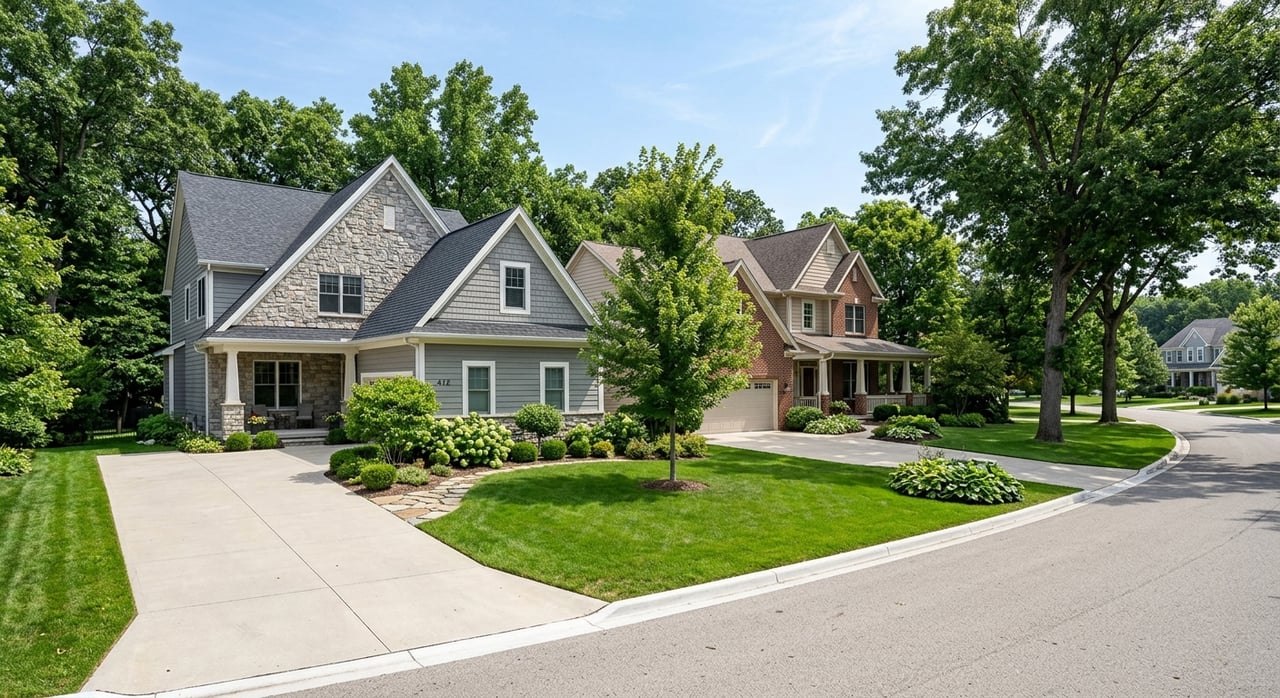
Choosing a Greenville neighborhood can feel like picking between two good homes for very different reasons. You might love the charm of an older street near downtown, or you may prefer the cleaner lines and predictability of a newer community. The good news is that Greenville gives you both, and understanding the tradeoffs can help you buy with more confidence. Let’s dive in.
Why this choice matters in Greenville
Greenville is growing, and that growth shapes how neighborhoods feel and function. The city grew from 71,139 residents in 2020 to 75,310 in 2025, while Greenville County grew from 525,549 to 583,125 over the same period. That continued demand means buyers often have to decide not just which house they want, but which kind of neighborhood fits their lifestyle best.
There is also a practical cost difference to keep in mind. The city’s median owner-occupied home value is $487,500, compared with $299,000 countywide. In simple terms, in-town Greenville neighborhoods often come with a higher price premium, but they may also offer shorter daily drives, with the city’s mean commute at 19.0 minutes versus 23.4 minutes countywide.
What established Greenville neighborhoods offer
Established neighborhoods in Greenville often appeal to buyers who want character, history, and a setting that feels layered over time. In many cases, you will find older street grids, mature landscaping, and homes with architectural details that stand apart from more standardized new builds. These areas can be especially appealing if you like the idea of putting your own design vision into a home.
Greenville’s official historic districts include Hampton-Pinckney, Overbrook, Pettigru, Heritage, West End, East Park Avenue, and the Colonel Elias Earle District. The city notes that several of these areas trace back to Greenville’s earlier periods of growth, including Hampton-Pinckney, Overbrook, East Park Avenue, and West End. That long history is a big part of their appeal.
Character often comes with rules
If you are drawn to an established neighborhood, it is important to understand that charm may come with extra review standards. Greenville uses Preservation Overlay Districts and a Downtown Design Overlay, and the city’s GIS tools identify historic-resource properties, preservation districts, downtown design areas, and historic review areas. That means exterior changes, renovations, or additions may require a closer look before you move forward.
For some buyers, that is a drawback. For others, it is part of what protects the neighborhood feel that made the area attractive in the first place. The key is knowing early how much flexibility you want as a homeowner.
Mature trees are part of the appeal
One reason older Greenville neighborhoods feel so established is the tree canopy. The city has Level I arboretum status, more than 130 varieties of trees and woody plants, and a 2021 tree ordinance that requires replanting removed trees or payment into the Open Space Fund. If you picture shady streets and established landscaping as part of your ideal setting, that can be a meaningful factor.
Tree cover is not just visual. It also shapes how a street feels when you arrive, walk, or spend time outside. For buyers who care about atmosphere and curb appeal, mature landscaping can be a major advantage.
Renovation potential can be a plus
Older homes often need updates, but they can also offer room to create something special. Greenville’s owner-occupied rehabilitation program can provide up to $24,500 to qualified low-income owner-occupants. While not every buyer will qualify, the program reflects a broader truth about older neighborhoods: improvement and reinvestment are part of the story.
If you can look past dated finishes and focus on layout, lot placement, and long-term potential, an established neighborhood may give you more opportunity to create a home with personality. This is where a design-minded approach can be especially helpful when you evaluate what a property could become.
What emerging neighborhoods offer
Emerging neighborhoods often attract buyers who want change, momentum, and the possibility of getting into an area as it evolves. In Greenville, several neighborhoods and planning areas are actively changing, including Greenline-Spartanburg, Haynie-Sirrine, West Greenville, West End Small Area Plan, West Washington Street, and the West Side Park Plan area. The city also says Greenline-Spartanburg is currently updating its community master plan, and County Square Redevelopment remains an active development project.
That kind of activity can signal opportunity, but it also means you should expect change around you. Streetscapes, nearby uses, traffic patterns, and new development can all shift over time. If you like the idea of being part of an area in transition, that may be exciting. If you prefer a more settled environment, it may feel less predictable.
Newer communities often bring structure
Outside the older in-town pattern, newer communities in the Greenville area are often easier to spot because they move through a formal subdivision process. Greenville County defines a major subdivision as one with seven or more lots, or one that adds a new street or right-of-way, extends public water or sewer, or requires drainage improvements. In practice, that often means more standardized planning and a clearer community layout.
Recent filings show the scale buyers may encounter. Toll Brothers at Armstrong Creek includes 91 lots across 124.2 acres with 60.9 acres of open space. Broadleaf Bluffs spans 43.26 acres with 100 lots, and Logan Reserve spans 37.26 acres with 100 lots and cluster-development approval.
HOA review matters in newer areas
In many newer communities, association governance is part of the ownership experience. Greenville County’s assessor maintains HOA-related exemptions and builder or developer discounts, which is a reminder that buyers should expect HOA documents to be part of their due diligence. That means looking beyond the home itself to review dues, covenants, amenity packages, and rental rules.
For some buyers, that structure is helpful. It can create more consistency across the neighborhood and set clear expectations. For others, it can feel restrictive, especially if you want more freedom in how you use or update your property.
How to compare the two
The right choice usually comes down to how you want to live day to day. Both established and emerging neighborhoods can be a good fit, but they tend to solve different priorities.
Here is a simple way to think about it:
- Choose an established neighborhood if you value architectural character, mature trees, closer-in location, and renovation potential.
- Choose an emerging neighborhood if you value newer systems, more standardized planning, and the possibility of growth and change around you.
- Choose a newer planned community if you want predictable layouts, newer construction patterns, and clear neighborhood rules.
Greenville factors that can guide your decision
Location and commute
Greenville’s shorter city commute is one reason close-in neighborhoods remain attractive. The city reports a mean commute of 19.0 minutes, compared with 23.4 minutes countywide. If getting to downtown, nearby services, or established corridors quickly matters to you, location may outweigh the appeal of a newer home farther out.
Transit and trail access
Convenience is not just about driving. Greenlink operates 12 fixed routes across Greenville County, with bike racks on buses and weekday service from 5:30 a.m. to 11:30 p.m. The Swamp Rabbit Trail Network is a 28-mile multi-use greenway connecting Travelers Rest and Greenville, and downtown Greenville also offers trolley service.
Close-in established neighborhoods often benefit most from these amenities. Newer communities may offer more space, but they can trade away some of that central access.
Taxes and monthly cost
Neighborhood choice is only part of your budget picture. Greenville County says owner-occupied homes can qualify for the 4% assessment ratio, and eligible homeowners who are 65 or older, totally and permanently disabled, or legally blind may qualify for the homestead exemption on the first $50,000 of taxable market value. These rules do not make one neighborhood type better than another, but they can affect total ownership cost.
Zoning and overlays
Before you commit to a property, confirm how the parcel is regulated. Greenville County directs owners and buyers to check the zoning map and lot size requirements, while the city’s GIS guide shows house-scale, neighborhood-scale, mixed-use, community-scale, and preservation-overlay zoning categories. This matters because the real difference between established and emerging is not just age. It is also about what changes are allowed and how the property fits into the city’s plans.
A practical way to decide
If you are torn, try narrowing your choice with a few honest questions:
- Do you want a home with character, even if it may need updates?
- Do you prefer newer systems and a more predictable maintenance outlook?
- How important are mature trees, central location, or trail access?
- Are you comfortable with preservation review or HOA rules?
- Do you want a home you can personalize over time, or one that feels more move-in ready from day one?
Your answers will usually point you in the right direction faster than a long list of features. In Greenville, the best neighborhood is often the one that matches your daily habits, your budget, and your comfort with change.
Whether you are drawn to a historic street in Overbrook, a close-in pocket near West Greenville, or a newer planned community outside the urban core, the goal is the same: find the place where your lifestyle and the property’s potential line up. If you want a thoughtful, design-aware approach to comparing Greenville neighborhoods and homes, Jeff Brockelman can help you book a consultation and build a plan around what matters most to you.
FAQs
What is the difference between established and emerging neighborhoods in Greenville?
- Established Greenville neighborhoods usually offer more history, architectural character, mature trees, and renovation potential, while emerging neighborhoods often involve active planning, ongoing change, and a greater chance of newer development patterns or HOA-style governance.
Which Greenville neighborhoods are considered established?
- Greenville’s official historic districts include Hampton-Pinckney, Overbrook, Pettigru, Heritage, West End, East Park Avenue, and the Colonel Elias Earle District.
Which Greenville areas are actively changing?
- City planning documents highlight Greenline-Spartanburg, Haynie-Sirrine, West Greenville, West End Small Area Plan, West Washington Street, the West Side Park Plan area, and the County Square redevelopment area as places experiencing active planning or change.
Are older Greenville neighborhoods more expensive?
- In-town Greenville neighborhoods often carry a higher price premium, reflected in the city’s median owner-occupied home value of $487,500 compared with $299,000 countywide.
What should buyers check before choosing a Greenville neighborhood?
- Buyers should review commute patterns, trail or transit access, zoning, lot dimensions, preservation overlays, HOA documents when applicable, and whether the home will qualify as owner-occupied for tax purposes.
Do newer Greenville communities usually have HOAs?
- Many newer communities involve association governance, so buyers should expect to review HOA dues, covenants, amenity packages, and rental rules as part of their due diligence.